
Introduction
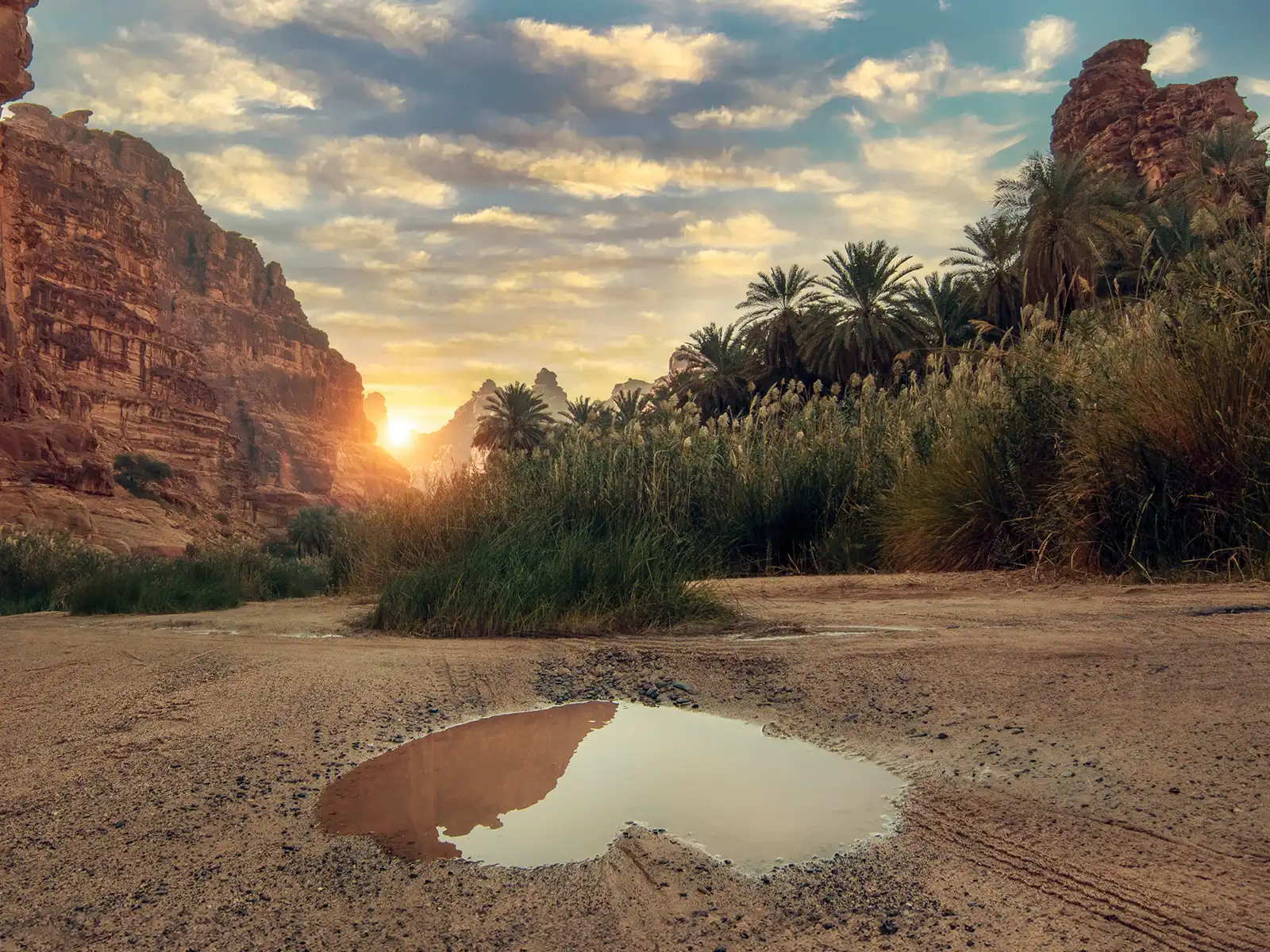
Tabuk is a region shaped by movement and scale. Ancient trade routes once crossed its land, leaving traces among mountains, valleys, and open plains. Today, Tabuk feels expansive and quiet, defined by natural contrasts where desert meets sea and history sits lightly within wide landscapes.
Why Visit Tabuk
Tabuk is ideal for travelers drawn to outdoor exploration and lesser-known routes. The region offers a mix of dramatic terrain, archaeological sites, and coastal nature along the Red Sea. Its openness invites slow travel, road journeys, and time spent outdoors, away from dense urban centers.
Top Highlights
Mountain and Valley Landscapes
Tabuk’s interior is marked by rugged mountains, sandstone formations, and wide valleys. These landscapes change throughout the day as light moves across rock and sand, creating strong visual contrasts and a sense of scale.
Ancient Routes and Archaeological Sites
For centuries, Tabuk sat along important travel and trade corridors. Scattered archaeological remains and historic pathways reflect the region’s role as a point of passage linking different parts of the Arabian Peninsula.
Red Sea Coastline
Along the western edge of the region, Tabuk opens onto stretches of relatively untouched Red Sea coastline. Clear waters, quiet beaches, and marine life make this area suitable for nature-based coastal experiences.
Desert Exploration and Open Space
Large areas of Tabuk remain undeveloped, offering wide horizons and uninterrupted views. These open spaces are ideal for desert drives, photography, and observing natural light and weather patterns.
Local Settlements and Daily Life
Small towns and communities provide insight into regional life shaped by climate, travel, and geography. Markets and gathering spaces reflect traditions tied to movement, hospitality, and trade.
Signature Experiences